
Bi-Color Tourmaline


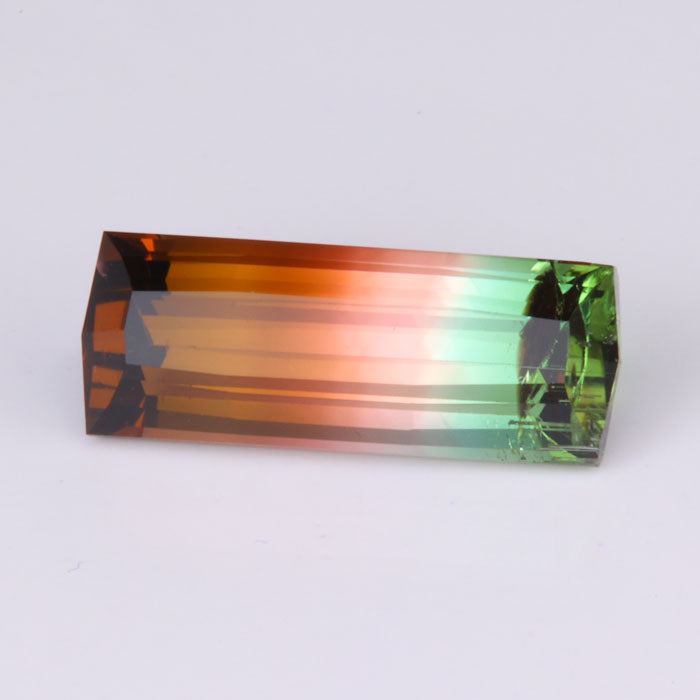
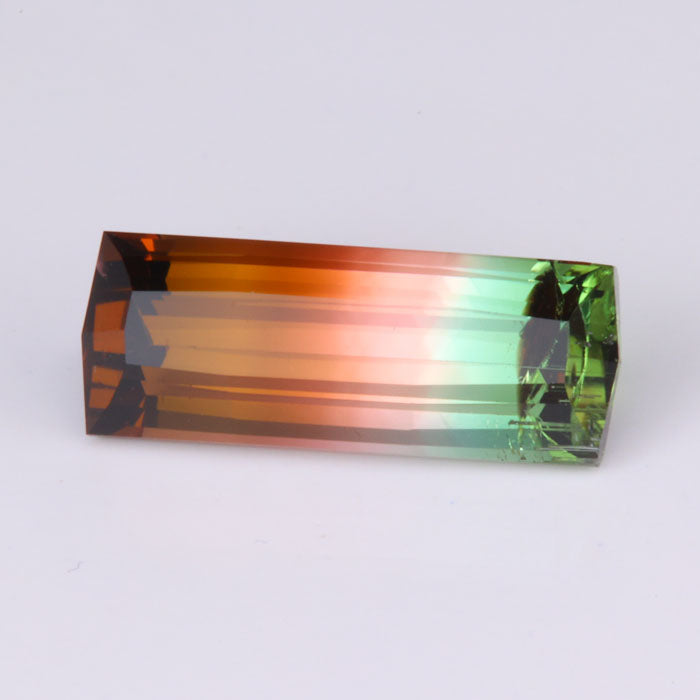
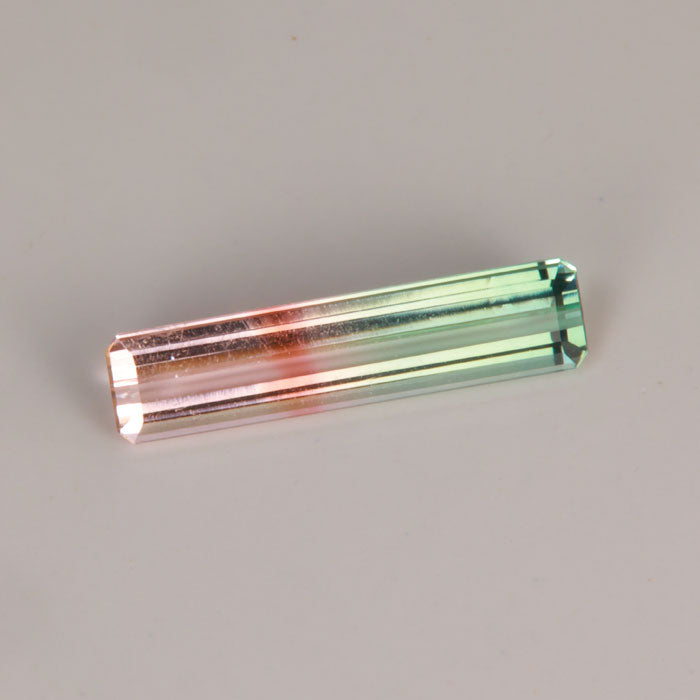
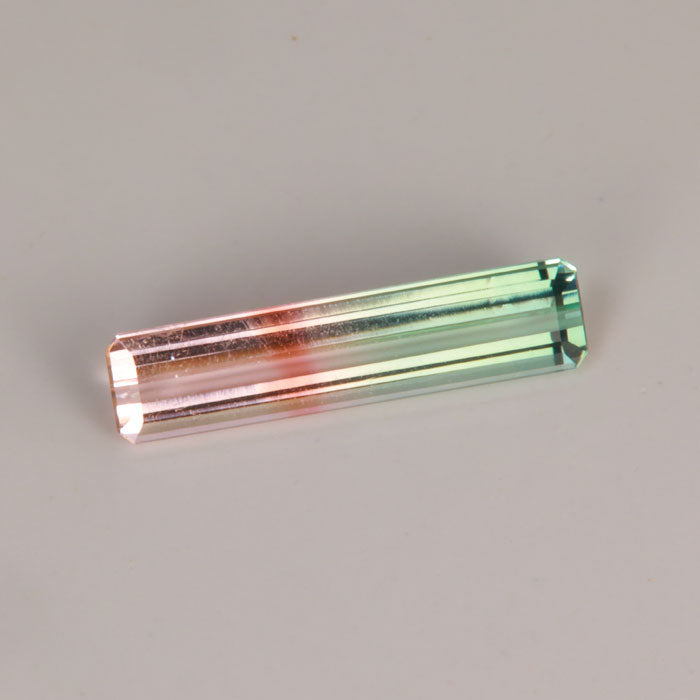
Bi-color tourmaline is one of those gemstones where nature does most of the design work for us. Instead of displaying a single color throughout the stone, bi-color tourmaline contains two distinct colors within the same crystal. Depending on the rough, you may see combinations of pink and green, blue and green, yellow and green, pink and colorless, or other unusual pairings.
What makes a great bi-color tourmaline isn't simply having two colors. We look for stones where the colors are attractive on their own but also transition well together. In some gems, the change from one color to another is sharp and dramatic. In others, the colors gradually blend through the center of the stone. Every piece of rough is different, which means no two finished bi-color tourmaline gemstones are exactly alike.
How Does Bi-Color Tourmaline Get Its Colors?
Tourmaline forms in an incredible range of colors because changes in trace elements and conditions can occur while the crystal is growing. As the chemistry surrounding the growing crystal changes, the color of the tourmaline can change with it.
The result can essentially be a record of different stages of the crystal's growth preserved inside a single gemstone.
This is also why cutting bi-color tourmaline requires more thought than simply choosing a standard shape and maximizing carat weight. The orientation of the rough can determine where the color transition appears, how much of each color remains and how the two colors interact in the finished gemstone.
Bi-Color Tourmaline vs. Watermelon Tourmaline
You'll often hear the terms bi-color tourmaline and watermelon tourmaline used together, but they aren't necessarily the same thing.
Bi-color tourmaline is the broader category for tourmaline displaying two distinct colors. Watermelon tourmaline is a specific color combination traditionally associated with pink or reddish-pink and green, resembling the colors of a watermelon.
That means a watermelon tourmaline can be considered bi-color or multi-color tourmaline, but a blue-and-green bi-color tourmaline wouldn't normally be called watermelon tourmaline.
What Makes a Good Bi-Color Tourmaline?
When we're selecting and cutting bi-color tourmaline, we're looking at much more than carat weight. Color, saturation, clarity, the placement of the color zones and the quality of the finished cut all contribute to the beauty of the stone.
Sometimes preserving a little less weight produces a dramatically better gemstone because the color division can be positioned more effectively. That's one of the advantages of approaching these stones from a gem cutter's perspective rather than simply trying to produce the heaviest finished stone possible.
Look through the loose bi-color tourmaline gemstones in this collection and you'll see that some have very distinct areas of color, while others have softer transitions. That's part of what makes collecting these gemstones so interesting.
Custom Jewelry for Your Bi-Color Tourmaline
Every gemstone shown in this collection is being offered as a loose bi-color tourmaline, but it doesn't have to stay that way.
If you find a gemstone you love, our family can work with you to create a custom bi-color tourmaline ring, pendant or other piece of jewelry specifically around that stone.
This can be particularly effective with bi-color tourmaline because a custom setting can be designed around the gemstone's individual shape and color pattern rather than forcing a unique stone into a mass-produced mounting. Whether you want a simple design that keeps the attention on the tourmaline or a more elaborate piece with diamonds or complementary colored gemstones, we can help create something specifically for your stone.
Start with the gemstone. We'll help you take it from there.

